East Hampton Agricultural Commission votes to rewrite founding ordinance
East Hampton's Agricultural Commission votes to rewrite its ordinance and revisit a $150 farm stand fee. New member Chris Caldwell, who sold a certified-organic farm on Martha's Vineyard, was introduced before the panel voted unanimously to make youth membership optional rather than mandatory.
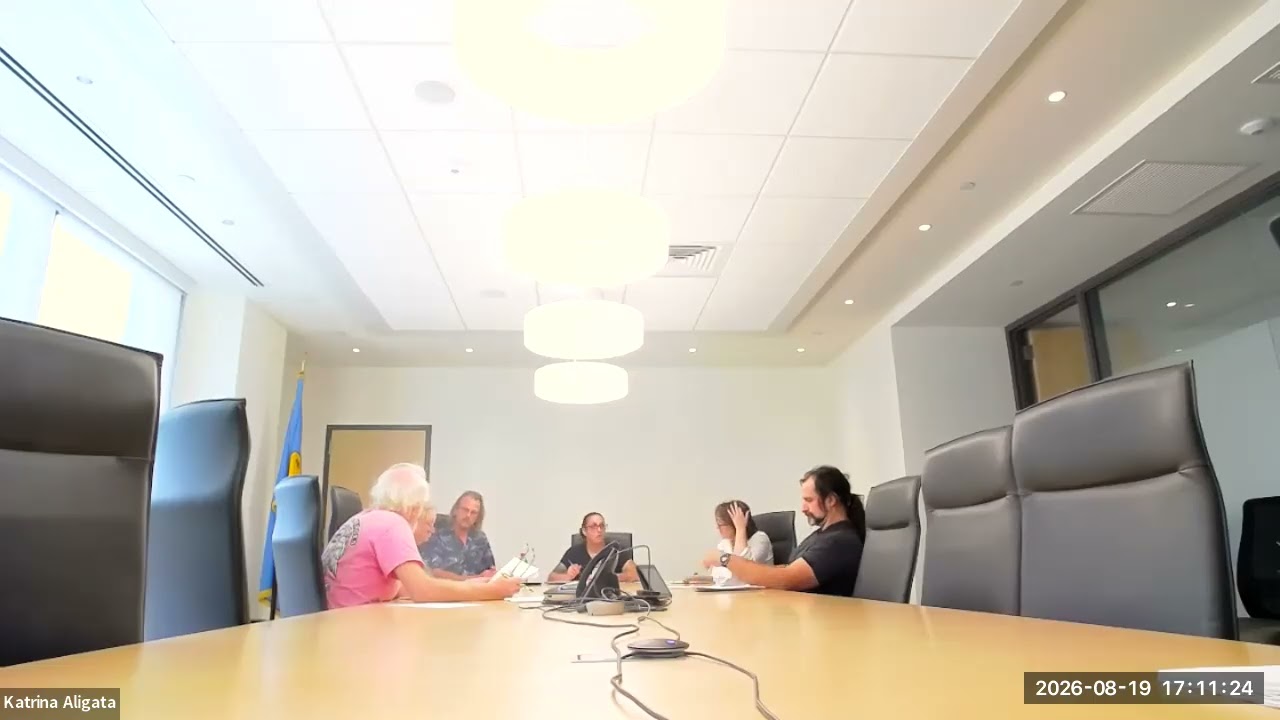
Other Committee · Meeting of August 20, 2026
East Hampton's Agricultural Commission votes to rewrite its ordinance and revisit a $150 farm stand fee. New member Chris Caldwell, who sold a certified-organic farm on Martha's Vineyard, was introduced before the panel voted unanimously to make youth membership optional rather than mandatory. Resident Rebecca Harvey praised the town's first farm stand crawl, saying "I think having the agricultural committee be part of whatever the town decides to do next for this would be great." Members called the $150 annual stand permit fee unenforced and burdensome to small producers and continued that review, along with a Right to Farm ordinance rewrite citing state statutes 1-1Q and 19a-341, to the next meeting.
The commission also set a tentative Oct. 10 date for a second farm stand event.
In the full story:
- Who Was There
- Organizations And Documents Referenced
- The complete report — 2,908 words
Source: the Other Committee meeting of August 20, 2026, reported from the official video recording and transcript.
The Full Article
Call to Order and New Member Introduction
The Agricultural Commission opened its Aug. 20 meeting by adopting the agenda and approving minutes from its July 15, 2026 meeting without discussion, both by unanimous voice vote. The commission then introduced its newest member, Chris Caldwell, who told members he moved to East Hampton shortly before Thanksgiving to be closer to his grandchildren. Caldwell said he had recently sold a six-acre, certified-organic farm on Martha's Vineyard, where he raised orchards, birds, ducks and chickens, after a prior career as a builder. "Now I'm here and I have all this time and I have some energy and I have some skills, and I thought I would throw my hand in," Caldwell said, describing his decision to volunteer for the commission.
Public Comment: Farm Stand Crawl Follow-Up
Two people addressed the commission during public comment. An unidentified man who said he lives on Kitty Pond Road told the commission he grew up in dairy and farm country in New York and has produced maple syrup in Connecticut since the 1970s; he thanked members for their work and welcomed Caldwell. Rebecca Harvey, who identified herself as an East Hampton resident, joined by phone to thank the commission for organizing the town's first farm stand crawl the previous weekend, in which she said she participated as a vendor. Harvey said she was already hearing that the neighboring town of East Haddam might replicate the event and suggested the commission stay involved in whatever the town does next. "I think having the agricultural committee be part of whatever the town decides to do next for this would be great, and I hope you guys consider that," Harvey said.
Members who had also taken part in the crawl called it well received and discussed ways to better publicize future events, including a shared paper map of participating farm stands and a Facebook page, Agriculture in East Hampton, that multiple members said they now help administer. One member suggested a permanent, tourist-style self-guided map similar to one used on Martha's Vineyard, noting some East Hampton farm stands are set back from main roads and easy to miss.
Agricultural Commission Ordinance: Membership and Enforcement Provisions
Background and stakes: The commission's founding ordinance was written 13 years ago, members said, after a dispute involving backyard roosters prompted the town council of that era to attempt to define what qualified as a farm. Members said the ordinance was never revisited and that an earlier effort to seat the commission failed in part because organizers could not find enough interested students or members to fill it.
The question before the body: whether to keep, as written, a requirement that three non-voting youth members under age 19 sit on the commission, and a provision assigning a role to the town's animal control officer in farm-related complaints.
Substantive content: The ordinance requires that youth members be "recommended by the commission" and "approved by the town council." Members noted the ordinance does not specify how those youth would be identified or recruited, and that East Hampton has no Future Farmers of America chapter; students interested in agricultural education currently travel to a program in Middletown. Members also discussed that the town has no formal channel to reach homeschooled students, who they said make up a meaningful share of families involved in small-scale farming and livestock keeping locally.
The deliberation: A member raised the concern first: "How, why are there some with three-year terms and some with two?" prompting a broader review of the ordinance's origin. Another member said keeping the youth provision mandatory could unintentionally disable the commission if no student ever applied, and separately that a strict age cutoff could force a high school senior off the panel mid-year upon turning 19. "I wouldn't want it in the ordinance where it precludes the Agriculture Commission from operating," one member said. On the animal control provision, members debated how much authority the local animal control officer should retain given that Connecticut's Right to Farm law ultimately routes unresolved agricultural disputes to the state Commissioner of Agriculture, not the town. One member argued local police and animal control remain the appropriate first responders for a complaint, such as a rooster dispute, even though the state has final say on whether an activity is protected farming.
Procedural steps and outcome: A member moved to direct staff to rewrite the ordinance to remove the mandatory youth-member requirement while still inviting student participation, and to reword the animal control officer provision. The motion was seconded and approved unanimously by voice vote, with the rewritten language to come back for formal adoption at a future meeting.
Implications and what is next: The change would let the commission continue operating even if no youth ever applies, while leaving the door open to student and homeschooled participants. The reworded ordinance is expected to return for a vote at a subsequent meeting.
Right to Farm Ordinance: Aligning with State Statute
Background and stakes: Connecticut's Right to Farm law protects normal agricultural practices, including five specific nuisances — noise, odor and others members described as "pollution" and "sound" — from most local nuisance complaints, and state law supersedes town regulation on those points. Members said East Hampton has no local noise ordinance, and that unresolved animal-noise complaints in the past were handled inconsistently by the town council rather than through the state's framework.
The question before the body: whether the commission's draft Right to Farm ordinance language is consistent with, and does not attempt to override, state statute.
Substantive content: Members focused on three statutory references in the draft: Connecticut General Statutes 1-1Q, which defines "agriculture"; General Statutes 19a-341, which one member said "perfectly describes what is a farm"; and General Statutes 7-148, a general municipal police-powers statute. A member who said he had reviewed 7-148 the day before told the commission it "had nothing to do with agriculture" and recommended it be struck from the draft. Members also debated a clause reading that farming definitions "may be amended from time to time," ultimately agreeing that phrase should be removed because the ordinance should track the state statute as written, not as it might change unilaterally at the local level. A separate clause stating that nothing in the ordinance restricts the authority of the town's Inland Wetlands Commission, Planning and Zoning Commission, or building and health departments was also debated; one member argued it duplicated existing legal authority and was not present in comparable ordinances from other towns.
The deliberation: "It's about us as a commission to make informed decisions," one member said, explaining why the group was reading the statutory citations line by line rather than simply approving the draft as presented. Members also discussed how a solar array on farmland would be treated, agreeing it would not qualify for Right to Farm protection because energy generation does not fall under the state's definition of agriculture in 1-1Q.
Procedural steps and outcome: A member moved to continue review of the Right to Farm ordinance to the next meeting so members could individually research the cited statutes, including 19a-341, before finalizing language. The motion was seconded and approved unanimously.
Implications and what is next: Members said they hope to have language ready for formal adoption at the next meeting, which would then proceed toward town council review.
Planning and Zoning: Restrictive Rules and the Farm Stand Fee
Background and stakes: A commission member circulated the town's current planning and zoning language covering agriculture, saying it had not been reviewed comprehensively in some time and contained several provisions members considered outdated or overly restrictive.
The question before the body: which zoning provisions conflict with normal farm operations or state law, and whether the $150 annual fee required for a special permit to operate a roadside farm stand should be changed.
Substantive content: Members read aloud a provision stating that buildings "shall be used to house all livestock, vehicles, implements, and supplies related to agriculture and personal livestock uses," with outdoor storage "prohibited" — language one member called not reflective of how any farm actually operates. Another provision barring horse waste from crossing a property line was flagged as likely superseded by the state's Right to Farm nuisance protections. On signage, the regulations cap farm stand signs at 12 square feet and bar stands within 50 feet of a street intersection or property line, rules members said are frequently violated in practice, including by long-established local farm stands.
The fee itself drew the sharpest reaction. Under the R4 zone's special-permit rules for roadside stands, operators must pay $150 per season, with no inspection tied to the payment. Rebecca Harvey had told the commission during public comment that some farm stand crawl participants declined to register with the town specifically because of the fee. A member who said they had run an egg operation for years described margins so thin — seven cents profit per dozen eggs, by their account — that the fee could wipe out a season's earnings for a small producer. "So to have to pay $150 just to have a farm stand out there to be able to make a little something to be able to help keep them going on their own property... we should not have to be paying that kind of stuff," a commission member said.
The deliberation: Members debated whether the fee funds any actual town service. One member said, to their knowledge, no inspections have ever been conducted and the fee appears to generate revenue without a corresponding town cost. Another member noted the requirement predates most current members' tenure by roughly two years' worth of no enforcement. There was broad agreement among members present that the fee discourages the kind of small, informal participation the commission wants to encourage, though several also acknowledged any change would require action by the Planning and Zoning Commission and likely the town council.
Procedural steps and outcome: No motion was taken to eliminate the fee outright. A member moved to continue the review of planning and zoning provisions, including the fee, to the next meeting so the commission could decide whether to propose a single package of changes or address items individually. The motion was seconded and approved.
Implications and what is next: Members discussed inviting a Planning and Zoning Commission liaison to a future meeting and holding an informal workshop to identify which changes should go through Planning and Zoning first versus directly to the town council. Any formal zoning amendment would require a public hearing following a 30-day posting period, a timeline members said would likely stretch several months from filing.
Fall Agricultural Event Planning
Background and stakes: The commission's first farm stand crawl, held the weekend before the meeting, drew strong participation and positive feedback, prompting discussion of a second, fall-focused event.
The question before the body: whether to plan a follow-up event and, if so, when.
Substantive content: Members discussed formats ranging from a repeat of the farm stand crawl to a centralized farmer's market-style gathering, potentially near the town center or a school parking area used seasonally with the town's permission. Members noted an earlier long-running farmer's market at a church lot had ended when its organizer's spouse retired from running it, and that the lot is privately owned by the church, not the town, despite a parking arrangement during school hours. Several members said they preferred the farm stand crawl model because it allows visitors to see where products are actually grown and requires no additional insurance or permitting burden on vendors, unlike a centralized market.
The deliberation: Members debated timing at length, weighing the Durham and Portland agricultural fairs, deer hunting season, and the Columbus Day holiday weekend, when many residents travel. One member noted that pushing the event past mid-October risks leaving only winter squash for sale as summer produce winds down.
Procedural steps and outcome: A member moved to tentatively set the event for Oct. 10, with logistics to be finalized at the commission's next meeting. The motion was seconded and approved unanimously by voice vote.
Implications and what is next: Members said they would use the Agriculture in East Hampton Facebook page to recruit additional farm stand participants ahead of the event and finalize details, including a printed map, at the next meeting.
Farmland Classification, Tax Exemptions and Point-of-Origin Labeling
Background and stakes: A member raised what they described as an inconsistency between the assessor's office and zoning rules: minimum residential lot-size requirements, which vary by zone, are subtracted from a parcel before any remaining acreage can be classified as farmland, meaning a smaller property in one zone can sometimes protect less farmland than logic would suggest, regardless of how much of it is actively farmed.
The question before the body: whether the commission should pursue a zoning or ordinance change addressing farmland classification, and separately, whether to research municipal farm-building and machinery tax exemptions.
Substantive content: One member said their property sits in an R4 zone with a 1.95-acre minimum residential lot requirement, leaving only about a quarter-acre eligible for farmland classification despite the member farming a larger share of the parcel. Members also discussed a state farm-building tax exemption allowing farms grossing $15,000 or more annually to exempt up to $100,000 in farm buildings and a separate $100,000 in farm machinery from local property tax; members said the state recently raised the cap to $500,000 but that adoption is left to individual towns, and that East Hampton has not yet acted on the higher cap. Members distinguished that exemption from a separate "homesteading exemption" the town council had previously declined to adopt because it was seen as unfairly benefiting higher-valued properties. Members also discussed a cottage food license threshold of $25,000 in annual gross revenue, above which state registration becomes mandatory rather than voluntary, and a state requirement that any product sold at a farm stand but not grown there carry a clear point-of-origin label.
The deliberation: "When you don't allow somebody to utilize all of their property for agriculture, it's not [helping] agriculture," one member said, arguing the zoning formula works against the commission's stated goal of promoting farming. Another member cited East Haddam as a town that may have addressed a similar classification problem by creating zoning subcategories, such as an agricultural overlay, though members said they had not yet confirmed the details and planned to research it before the next meeting.
Procedural steps and outcome: No formal motion was made on farmland classification or the tax exemption cap; members agreed informally to research the issue, including how East Haddam handled it, ahead of the next meeting.
Implications and what is next: Members said any change to the classification formula would not alter what a farmer owes in taxes but could allow more land to qualify as farmland, potentially opening access to the building and machinery exemptions for property owners currently excluded by lot-size math.
Agricultural Commission members present: Chris Caldwell (newly appointed member, introduced at this meeting); several additional commission members participated in deliberation throughout the meeting but were not identified by name in the available recording.
Public commenters: an unidentified man who said he lives on Kitty Pond Road and has produced maple syrup in Connecticut since the 1970s; Rebecca Harvey, an East Hampton resident who participated by phone and identified herself as a farm stand crawl vendor.
Other individuals referenced but not present or not commission members: a person identified only as "George," whose absence a member noted with regret; a person referred to as "Rick," mentioned in connection with a farmland classification discussion; Peter Burgund, described as the owner of a Christmas tree farm at the end of Cone Road; and Attorney Grady, referenced as the owner of a house near a farm on Oakum Dock Road visited during the farm stand crawl.
Connecticut Farm Bureau (cfba.org) — cited as a membership organization offering resources and advocacy related to farming statutes, including Public Act 490.
Connecticut PA 490 Facebook group — described by a member as a source of statewide discussion on agricultural tax and right-to-farm issues, including a recent informal poll on agritourism standards.
Steed Farm (spelled S-T-E-A-D per a member's on-the-record clarification) — referenced as a source of online discussion on Public Act 490 issues.
Connecticut General Statutes 1-1Q — the state's definition of "agriculture," discussed as the cornerstone of the commission's Right to Farm ordinance language.
Connecticut General Statutes 19a-341 — a state statute members said defines farming activity and Right to Farm protections; flagged for further individual review before the next meeting.
Connecticut General Statutes 7-148 — a general municipal police-powers statute members agreed should be removed from the draft Right to Farm ordinance as unrelated to agriculture.
Town of East Hampton Planning and Zoning Commission — the body members said must review any change to zoning language or the farm stand permit fee before the town council can act.
East Hampton R4 zoning regulations, Section D (special permit uses) — cited as the source of the $150 seasonal farm stand permit requirement and related sign and setback rules.
Agriculture in East Hampton Facebook page — a community page multiple commission members said they help administer, used to share farm stand information and organize the farm stand crawl.
Share this story
Know someone in East Hampton who follows town government? Share Townbrief East Hampton: they can sign up free.