Council Affirms Appetite To Sell Town Land
East Hampton council affirmed an appetite to sell unused town land and tabled a license-plate-reader policy.
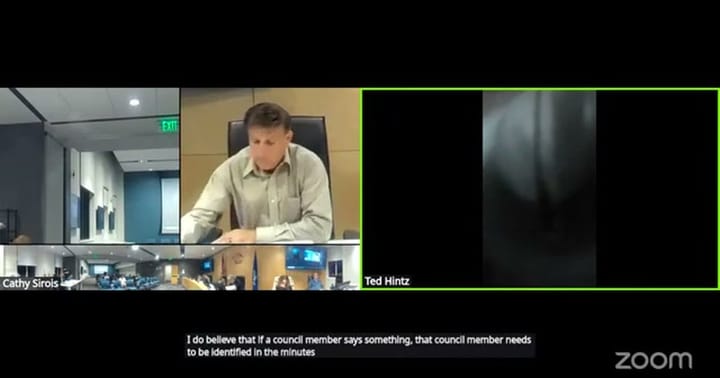
Town Council · Meeting of October 13, 2026
East Hampton council affirmed an appetite to sell unused town land and tabled a license-plate-reader policy. The Town Council voted, with one dissent, that it is open to selling town-owned parcels with no foreseeable municipal use, after Town Manager David Cox presented a map of roughly eight tax-sale lots, though members objected to specific parcels appearing on the agenda without prior council discussion. Police Chief Dennis Woessner pitched a contract-bundled license plate reader upgrade from vendor Axon, but the council tabled General Order 5.30 for further public discussion, calling it "absolutely not comfortable" territory for some members.
The council unanimously approved updated General Order 5.5 on family violence and a loosened Police Chief residency requirement. A motion to waive resident Rebecca Harvey's $195.50 FOIA copying fee failed on a roll call vote. The council also approved $382.09 in tax refunds.
In the full story:
- Who Was There
- Organizations And Documents Referenced
- The complete report — 3,381 words
Source: the Town Council meeting of October 13, 2026, reported from the official video recording and transcript.
The Full Article
Minutes and Agenda Adoption
A minor procedural dispute opened the meeting but points to a recurring governance issue. A council member asked that future minutes attribute specific comments to the member who made them rather than the generic phrase "a council member," noting that recordings eventually get destroyed while minutes are the town's permanent legal record. Chair Dean Markham agreed it was "a good policy" and said he would work with the recording clerk and Town Manager David Cox to improve minute detail. The council adopted the agenda and the September 22 regular meeting minutes unanimously. The September 29 special meeting and workshop minutes were approved with one member abstaining because they had been out of town for that meeting; the September 29 minutes themselves list Richard Knotek as not present that evening, making him the likely abstaining member here, though the October 13 transcript does not name him directly.
Agriculture Commission Ordinance
Background and stakes: The Agriculture Commission, after only a few meetings since its formation, reviewed its own enabling ordinance and recommended changes. The proposed Ordinance 2026.03 eliminates a requirement that three nonvoting youth members under 19 serve on the commission, replacing it with language directing the commission to "encourage and solicit active participation" by interested youth. The draft also formally designates the town's Animal Control Officer as a nonvoting ex officio member, a staff addition not requested by the commission itself.
The question before the body: Whether to adopt the ordinance amendment following a public hearing held at the start of the meeting.
Substantive content: No members of the public spoke during the public hearing portion specific to the ordinance. During the subsequent business discussion, council member Ted Hintz, Jr. said he had seen an online comment suggesting the Agriculture Commission was not consulted on the change, and asked for clarification. Cox and another member confirmed the item had been discussed at two commission meetings, and that the commenter who raised the concern had been absent from the meeting where it was addressed.
Deliberation and outcome: After the clarification, Councilwoman Leon moved approval, with a second, and the ordinance was adopted unanimously on a voice vote.
Implications: The commission can now include interested youth informally rather than filling three designated seats, which commission members said had been difficult to staff.
Public Remarks (First Round)
Several residents used the first public comment period to weigh in on agenda items. Rebecca Harvey argued the town's roughly $300,000 in unspent fiscal 2026 funds, combined with about $600,000 she said was already allocated elsewhere, meant the town was sitting on nearly $900,000 in "overpaid tax dollars" that could go toward road repairs. She also urged the council to drop license plate reader technology from town code entirely, including any future FLOCK-brand cameras, and asked that the $195.50 FOIA fee be waived, saying "I think $200 to review documents requested more than 20 weeks ago is a little bit crazy."
L.B. Galvin, giving an address on Whitebridge Road, cited Connecticut General Statutes Section 1-212, which permits a fee waiver when a request serves the general welfare, and asked the council to waive the fee and consider electronic delivery. Leonard Johnson argued the proposed police chief residency requirement, which currently restricts candidates to East Hampton or towns east of the Connecticut River, was too restrictive and should come with relocation assistance if retained. Resident Russell Kaplan, joining by Zoom, focused not on the merits of Harvey's request but on the broader cost to the town of responding to large records requests, warning that FOIA "can easily turn into something much darker" if used to overwhelm staff.
Eagle Scout Proclamation
The council unanimously adopted a proclamation honoring Aiden J. Gora of Boy Scout Troop 8 for attaining Eagle Scout rank. Gora was not present; his mother accepted on his behalf. The item consumed only a few minutes and included no debate.
Sale of Town-Owned Properties
Background and stakes: The council had previously discussed, in general terms, whether it wanted to consider selling surplus town-owned land. Cox's October 8 memorandum to the council explained that many of the parcels under review were acquired to resolve tax debts or through tax sales, rather than for any specific town purpose, and are likely buildable residential lots. One parcel at the intersection of Route 16 and Old Middletown Avenue is the subject of an active purchase offer: Seamus D. Boots, in an October 5 letter, offered the town its full appraised value of $2,100 for a 0.21-acre triangular lot, saying he intended it for gardening, small outbuildings and religious use connected to his vocation in the North American Catholic Ecumenical Church.
The question before the body: Whether the council has an appetite to pursue sale of any town-owned land not needed for municipal purposes, and if so, which process to use.
Substantive content: Cox shared a map identifying roughly eight parcels across several groupings, distinguishing buildable lots acquired through tax sales from parcels the town deliberately holds, such as the Pine Brook swamp acquisition and open space tied to subdivision approvals. Two parcels were flagged with question marks as likely not buildable, including one on Young Street/Route 196 the town has held since the 1930s for reasons Cox said staff have not yet determined.
Deliberation: The discussion turned contentious when a council member said the prior meeting's understanding was to discuss only whether the council had any appetite to sell land in general, not to review specific identified parcels already placed on the agenda. "Did I miss a meeting that we decided on parcels to add to the agenda," the member asked, adding that past practice on land matters had always gone through executive session first. Cox responded that he understood the intent was to identify an appetite to sell and had prepared the map and parcel list to help that conversation, not to propose specific sales. One council member said the approach "is absolutely unheard of and quite frankly I'm offended and insulted," while another responded that identifying which properties were actually available for sale was helpful information, not a predetermined sale list: "This is, I think we should, these are the properties that you could sell. That is not, that is very different than do you have an appetite to sell property?"
Debate also touched on how proceeds would be used. Cox said sale proceeds would generally flow to the general fund as unanticipated revenue, though the council could direct funds to a land acquisition reserve to purchase open space instead, "but they have to make a suggestion or a recommendation" through the normal budget process. A council member asked whether a sale could proceed without Board of Finance approval; Cox said any sale would ultimately require town meeting approval regardless.
Procedural steps and outcome: A motion was made affirming "the town council has an appetite to sell land that is not and has no foreseeable use by the town," with a second offered. The council called the question and voted, with the recording capturing both an "aye" and a "nay" response; the motion was declared approved, though the exact numeric tally was not distinguishable from the audio. No specific parcels were approved for sale. Markham noted that any parcel-specific negotiation would move to executive session, while the general policy question of whether to sell remains a public discussion.
Implications and what is next: Cox said staff would complete title research and buildability analysis on the identified parcels before bringing specific recommendations back to the council, which would then need to route any proposed sale through Planning and Zoning review and eventual town meeting approval.
End of Year Appropriation Requests
Background and stakes: The town closed fiscal year 2026 with approximately $300,000 in unexpended general fund dollars. The Board of Finance is reviewing year-end closeout at its October meeting, with council action expected October 27, according to Cox's memo.
The question before the body: Whether the council wants to direct the Board of Finance toward specific uses for the surplus, or let it default to unobligated reserves.
Substantive content: Cox noted past practice has included allocating such funds to capital reserves, special education reserves, or specific studies such as the town's prior fire station facility reviews. Council member Ted Hintz, Jr. argued some of the money should go toward keeping the transfer station's bulky waste service intact rather than eliminating it to cut costs, saying removing "the one thing that everyone uses the transfer station for is absolutely ridiculous." Other members suggested directing funds toward road repairs, noting money had been cut from the road budget this year, and one member suggested a share for the senior center.
Deliberation: Richard Knotek cautioned that any use of the surplus for an actual operating expense would still require a town meeting or referendum vote once funds hit the general fund, not just a council decision. Several members agreed in principle but did not commit to specific dollar splits, preferring to let staff bring back formal recommendations once the Board of Finance weighs in.
Procedural steps and outcome: No formal motion was made. The council directed Cox informally to prepare recommendations for the Board of Finance reflecting support for transfer station service continuity, road repair, and possibly senior center needs, for further discussion before the October 27 meeting.
Police Department General Orders
Background and stakes: The state's Police Officer Standards and Training Council (POST) issued updated statewide model policies in 2026 requiring local departments to revise General Order 5.5 (Family Violence) and General Order 5.30 (Automatic License Plate Readers). Chief Dennis Woessner's October 5 memo to Cox detailed the required changes, including updated jurisdiction language for electronic harassment complaints and expanded explanation of the state's Domestic Violence GPS Alert Notification Program for GO 5.5, and a reduction in automatic license plate reader data retention from 30 to 21 days under Public Act 26-14(a) for GO 5.30.
The question before the body: Whether to adopt both updated general orders, and separately, whether the town should pursue deploying license plate reader technology, which it does not currently have installed.
Substantive content: Woessner described East Hampton's current contract renewal with vendor Axon, which bundles license plate reader capability into existing in-car camera upgrades and includes two free fixed camera locations at town borders. He distinguished the technology from "FLOCK," which he said is a brand name, not the technology itself: "Automated license plate reader technology is the technology. FLOCK is a manufacturer of that technology. It's like Kleenex." Woessner cited specific past uses of license plate readers in neighboring jurisdictions, including identifying a vehicle involved in a fatal accident on Route 66 and Tarsia Road and locating a vehicle wanted in a New York City homicide that was later found on Route 66 in East Hampton.
Deliberation: Council member Karen Wanat said she was "not comfortable" with expanding camera coverage without further public discussion, while Hintz said he wanted a dedicated public information session, potentially involving Axon representatives or state officials, before residents weigh in further. Several residents in public comment, including Chris Patel and an anonymous online commenter, argued the technology raises Fourth Amendment concerns and cited ongoing federal litigation nationally challenging warrantless license plate data collection.
"I truly believe in giving the police the tools they need to do their job... but it seems to be a theme in the state, rather than fix already existing poor policy, you stomp on the rights of citizens." — Chris Patel, resident
Procedural steps and outcome: The council unanimously approved updated General Order 5.5 on Family Violence. A separate motion to table General Order 5.30 and the broader discussion of future license plate reader use passed on a voice vote, with the item to return at a future meeting, no date specified. Woessner noted state law requires the order be adopted in some form by January 1, 2027, regardless of whether the town ultimately deploys the cameras.
Implications: East Hampton has not committed to installing license plate readers. The council will need a further public session, which Woessner agreed to help arrange, before any future vote on deployment or on the tabled general order language.
Job Descriptions: Police Chief and Senior Center Program Assistant Lead
Background and stakes: The current Police Chief job description requires residency in East Hampton or an adjoining town east of the Connecticut River. Cox's memo said this could limit the candidate pool given the limited housing options and relocation costs involved, noting the town's other staff, aside from the town manager, carry no residency requirement.
The question before the body: Whether to relax the residency requirement and whether to adopt a new, full-time job description for the Senior Center Program Assistant Lead position created in this year's budget.
Substantive content: The proposed language would require the chief to live within Connecticut "within a reasonable distance as negotiated," rather than specifying towns. Members informally discussed capping that distance near 30 miles, with any greater distance requiring specific council sign-off, though the adopted language left the distance to be negotiated rather than fixed in writing. One member noted the town had previously dealt with a public works director living an hour away from his family during the work week, saying any new agreement should address travel-related liability and town vehicle wear.
Deliberation: Hintz said he supported extending the requirement but wanted assurance any chief living farther away would still be required to stay within reasonable reach during declared emergencies. Cox said he was comfortable incorporating a 30-mile informal threshold into hiring negotiations and that any relocation question involving a distant candidate would come back to the council before finalizing an offer.
Procedural steps and outcome: The council unanimously approved the amended Police Chief job description and unanimously approved the new Senior Center Program Assistant Lead job description, which Cox said was drafted by the senior center director.
Implications: The town can now recruit chief candidates statewide rather than limiting the pool to towns east of the river, potentially broadening the applicant field as the current chief, Dennis Woessner, is expected to retire.
Request for Waiver of FOIA Fees
Background and stakes: Resident Rebecca Harvey has filed multiple records requests this year, including ones covering an estimated 65,000 or more records tied to Cox and former Town Planner Juliet Hodge, currently under town attorney review for redactions. The specific request at issue involves 391 pages of personnel records maintained only on paper, which under state FOIA Commission guidance can be charged at up to 50 cents per page, totaling $195.50.
The question before the body: Whether to waive the $195.50 copying fee on public-interest grounds.
Substantive content: Cox explained the town's broader records-request workload, noting Harvey has already received more than 9,000 electronic records at no charge across eight requests since March, and that the personnel-records subset is the only part of the current requests involving physical paper that must be copied and charged.
"The records at issue for fee waiver are part of two open records requests that together will consist of approximately 65,000 or more records... currently being reviewed by the Town Attorney's office for appropriate redactions." — David E. Cox, Town Manager, October 8 memorandum
Deliberation: Hintz said he agreed the volume of work described was real but cautioned the council against treating the fee as punitive toward either staff or the requester: "If you're going to say that it's trying to harass the staff, you don't want it to appear that you're trying to harass the resident." Harvey, speaking again during discussion, said residents had offered to collectively cover the fee and that her objection was about principle, not cost. Karen Wanat asked Cox to clarify that only the paper personnel records were subject to the fee, with other records being withheld pending payment under the town attorney's position; Cox confirmed that framing.
Procedural steps and outcome: A motion to waive the fee was made and seconded. On a roll call, enough members voted no that the motion was declared defeated; the individual votes were not clearly distinguishable from the recording.
Implications: Harvey's personnel-records request remains on hold pending payment of $195.50, even as the much larger electronic record sets tied to the same underlying requests continue moving through legal review for release at no charge.
Town Manager's Report, Tax Refunds and Second Public Remarks
Cox's report noted the Plan of Conservation and Development remains in draft form, with public comment open through the end of October before Planning and Zoning review and an anticipated public hearing in December. He also reported the hiring of new police officer Bryce Cadwallader, currently in the police academy, and recognition of officers Steve Warwick and Caleb Cavanaugh by Mothers Against Drunk Driving for impaired-driving enforcement work. The council approved tax refunds totaling $382.09 unanimously.
During a second public comment period, resident identified only as "Chuck," speaking for the POCD steering committee, cautioned the council against making land and budget decisions before formally considering the POCD's findings on agriculture and open space. Resident Steve Drunks urged the council to direct any proceeds from property sales toward preserving farmland. Resident Becky Abbott gave an extended account of decades of traffic and odor issues near the transfer station, disputing recent claims that current bulky-waste service draws heavy traffic.
Executive Session
The council voted unanimously to enter executive session with Cox and the town attorney to discuss pending claims and litigation strategy, with no further business to follow.
Dean Markham, Chair, presided over the meeting. Jack Solomon, Vice Chair, participated in discussion, including the properties debate. Tim Feegel, Member, present. Ted Hintz, Jr., Member, spoke extensively on the FOIA waiver, general orders and appropriations. Richard Knotek, Member, spoke on land sale process and appropriations; likely the member who abstained on the September 29 minutes vote due to absence that evening. Joelyn Leon, Member, moved approval of the Agriculture Commission ordinance; referenced by members as having raised questions on license plate readers. Karen Wanat, Member, spoke on license plate reader discomfort and clarified FOIA fee scope. David Cox, Town Manager, presented on properties, appropriations, general orders, job descriptions and the FOIA fee waiver. Dennis Woessner, Police Chief, presented General Orders 5.5 and 5.30 and answered council questions on license plate reader technology. Cathy Sirois, Executive Assistant to the Town Council, staff support (not confirmed as physically present in this transcript, but listed on roster as supporting staff).
Public commenters: Rebecca Harvey; Cindy Craig, 3 Candlewood Drive; L.B. Galvin, 46 Whitebridge Road; Leonard Johnson, 21 Long Crossing Road; Russell Kaplan, 127 Comstock Trail (via Zoom); a resident identified only as "Chuck," 65 Spelman Point Road, speaking for the POCD steering committee; a resident identified as "Steve Drunks," 48 State Road; Becky Abbott, Bear Swamp Road; Chris Patel, 15 Old Clark Hill Road; one unidentified online commenter.
Outside parties: Seamus D. Boots, of Middletown, submitted a written purchase offer for a town-owned parcel discussed in the properties item.
Police Officer Standards and Training Council (POST) — issued the statewide model policy updates underlying both General Order 5.5 and General Order 5.30. Axon International — the town's current camera vendor, whose contract renewal includes license plate reader technology discussed in item 10b. FLOCK Safety — referenced repeatedly as a brand name for license plate reader hardware, distinguished by Chief Woessner from the underlying technology category. Mothers Against Drunk Driving (MADD) — recognized officers Steve Warwick and Caleb Cavanaugh, as noted in the town manager's report. Connecticut General Statutes Section 1-212 — cited by L.B. Galvin as authority for a public-interest FOIA fee waiver. Public Act 26-14(a) — cited in Chief Woessner's memo as the basis for the 21-day license plate reader data retention limit. Plan of Conservation and Development (POCD) — cited repeatedly regarding land use and budget priorities; in draft form with public comment open through October. David E. Cox's October 8, 2026 memorandum to the Town Council — source for the $300,000 surplus figure, the $195.50 fee calculation, and the properties background. Seamus D. Boots letter, dated October 5, 2026 — purchase offer for Map/Lot 12-35-3 on Old Middletown Avenue, cited in the properties discussion. Ordinance 2026.03 — the Agriculture Commission membership amendment adopted at this meeting.
Share this story
Know someone in East Hampton who follows town government? Share Townbrief East Hampton: they can sign up free.