Finance Board Cuts School Budget by $600,000
East Hampton's Board of Finance voted 5-2 to add $350,000 in education cuts, bringing total reductions to $600,000, and separately voted 5-2 to approve a $19,358,960 town operations budget.
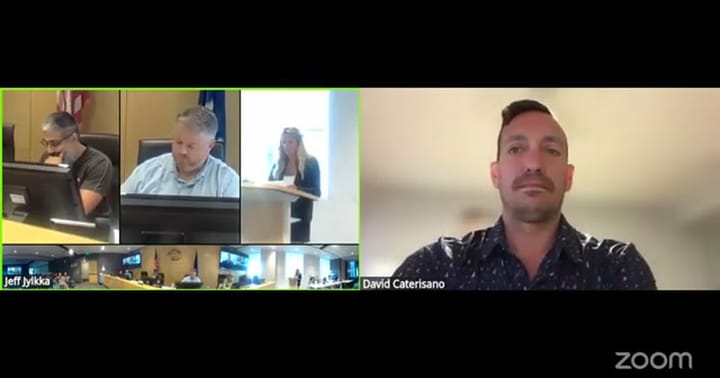
Board of Finance · Meeting of July 20, 2026
East Hampton's Board of Finance voted 5-2 to add $350,000 in education cuts, bringing total reductions to $600,000, and separately voted 5-2 to approve a $19,358,960 town operations budget. Chairman Anthony Spagnoletti said the cut matched a level Republican board members had sought at the last referendum after an earlier $250,000 cut "didn't seem to appreciably move the needle." Superintendent Dr. Timothy Van Tasel apologized to families after eliminating the Smart Start preschool program, citing a $600,000 target set before an August 27 school start.
The operations budget closes the Bear Swamp Road transfer station by January 1, 2027, funds only half a year of a vacant police officer position, and trims library Hoopla checkouts from five to three monthly. Member Daniel Finn separately asked the Town Council to adopt a Homestead Property Tax Exemption capped at $390,000 in assessed value to offset the town's recent revaluation. Finance Director Jeffery Jylkka reported a 12.8 percent fund balance and $600,000 to $800,000 in projected FY2026 net income.
In the full story:
- Who Was There
- Organizations And Documents Referenced
- The complete report — 2,359 words
Source: the Board of Finance meeting of July 20, 2026, reported from the official video recording and transcript.
Checked against the record: before publication this article was automatically compared with the meeting transcript. It was corrected where it differed.
The Full Article
Public Comment: Budget Cuts Draw Pleas From Residents
Background and stakes: The East Hampton school budget failed a second referendum this summer, forcing the district to prepare for roughly $600,000 in reductions just weeks before the August 27 start of school. The Board of Finance's July 20 meeting was the venue where the board finalized how much more to cut beyond the $250,000 reduction it had already recommended at the prior referendum.
The question before the body: Public comment gave residents a chance to weigh in before the board took up the education, town operations and capital budget items later in the meeting.
Substantive content: More than a dozen residents spoke. Haley Guite, of 16 Curry Lane, described families "scrambling to find another preschool when many programs are full or already have wait lists" after the district eliminated its Smart Start preschool program. Senior Center Director Holly Marrero said the center's membership grew by 466 people over two fiscal years to 1,326 members, with checkouts exceeding 15,500 last year and sometimes only two staff members on duty for more than 100 daily visitors. EHAA Chief Chris Wherry said the ambulance service receives about 0.18 percent of the town budget, below the 0.4 to 2 percent average cited for New England towns, and asked the board not to reduce it further. Police Chief Dennis Woessner said staffing had already dropped from 18 officers toward 2018-era levels of 15, warning that two-officer patrol shifts are unsafe, citing a July 14 six-person fight call with only two officers on duty. Fire Chief Robert Rainville said the department saves the town $2 million to $3 million annually through volunteer staffing and asked for $60,000 in financing for a replacement vehicle after a recent brake failure.
The deliberation: Resident Sal Nucifora, of 174 Colchester Avenue, challenged the $600,000 figure directly, saying "this is an arbitrary six hundred thousand dollars of cuts that they're looking for" and asking where the number originated. Cristal Chan, of 34 Walnut Avenue, said she was "sad and frustrated" about the Smart Start cut but acknowledged the difficult position created by two failed referendums.
Procedural steps and outcome: No votes were taken during public comment; it set up the budget discussion that followed.
Implications and what is next: The comments informed board members' later arguments, particularly around the senior center staffing level and ambulance funding, both of which the board ultimately left unchanged from the original proposal.
Financial Status Report
Background and stakes: State law requires the board to monitor town finances throughout the fiscal year to inform budget decisions.
The question before the body: Finance Director Jeffery Jylkka presented year-to-date figures for the closing FY2026 budget.
Substantive content: Jylkka reported revenue running positive by $604,000 and expenditures forecasting a positive variance of approximately $200,000, with some bills still outstanding. He projected the town would close FY2026 with net income between $600,000 and $800,000, bringing the unrestricted fund balance to 12.8 percent of the approved budget before any use of that surplus. He noted the board had already allocated $453,000 of that surplus toward the capital budget in a prior discussion, which would drop the fund balance to just over 12 percent.
Procedural steps and outcome: No vote was required; this was an informational report.
Implications and what is next: The 12.8 percent figure, within the town's 10-to-12 percent fund balance policy range, became the basis for later debate over whether to use additional surplus to offset either the capital levy or restore education and town operations cuts.
FY 2027 Education Budget: An Additional $350,000 Cut
Background and stakes: The board's prior $250,000 recommended cut at the last referendum did not change the outcome, according to Chairman Anthony Spagnoletti, who said "we saw very similar numbers in the last referendum to this one." The Republican board members had previously proposed a $600,000 cut; Spagnoletti said moving the additional $350,000 would align the board's position with that figure.
The question before the body: Whether to further reduce the proposed FY2027 education budget by $350,000, for a cumulative $600,000 reduction from the original proposal.
Substantive content: Superintendent Dr. Timothy Van Tasel told the board he apologized to Smart Start families and explained the administration worked from a $600,000 target communicated by town leadership before Wednesday's Board of Education meeting, given the need to finalize plans before the August 27 start of school. He said a $153,000 year-end projected balance had been intended for facility repairs, not special education as some board members suggested, citing about $100,000 in averaged annual HVAC motor replacement costs and a roughly $130,000 need to replace a 30-year-old snow-removal machine at the high school. He detailed the Smart Start program's finances: a $97,000 state Office of Early Childhood grant against a roughly $204,000 cost to operate the program, with a sliding-scale tuition fee potentially generating about $45,000 in additional revenue, still leaving a gap he said the district could not close without eliminating the program and its grant eligibility this year. He also itemized middle school athletics costs at $86,743 in total operational expense against $26,255 in prior-year program revenue.
The deliberation: Member Ted Turner argued the cuts were excessive, saying "a cut to the board of ed is insane" and attributing the budget's failure to backlash over the townwide property revaluation rather than the education budget itself. Spagnoletti countered that the additional $350,000 reduction equates to about $5.50 per month, or $66 per year, for a home assessed at $428,000, and said "there's no question that we can afford this as a town," while also cautioning against using one-time surplus to fund recurring program costs because it would require a larger tax increase the following year to sustain them without a repeat reduction. Member Daniel Finn proposed a $400,000 additional cut rather than $350,000, saying he would "like to see zero" but acknowledged the revaluation backlash shaped the referendum result.
Procedural steps and outcome: Member James Radavich moved to approve an FY2027 education budget of $39,550,937 for submission to voters at the next referendum; Walck seconded. The motion passed 5-2, with Turner and Caterisano opposed, according to meeting minutes.
Implications and what is next: The $600,000 total cut eliminates the Smart Start preschool program, reduces middle school athletics funding, cuts roughly $30,000 in after-school club stipends, and eliminates three digital classroom subscription programs. The revised budget goes to voters at the next referendum, a date not specified during the meeting.
FY 2027 Town Operations Budget: $200,949 in Reductions
Background and stakes: Town Manager David Cox was asked to identify additional service-impacting reductions in the general government budget after the same referendum failures that drove the education cuts.
The question before the body: Which of roughly $290,000 in potential town operations reductions, presented by Cox, the board would adopt to reach its target cut level.
Substantive content: Cox presented about 18 to 20 line items. The board adopted six: closing the Bear Swamp Road transfer station by January 1, 2027, and contracting with a private vendor for equivalent services including bulk waste, landscape waste, electronics and mattress recycling ($104,549); funding a vacant police officer position for only half of FY2027, preserving the full allocation starting in January ($55,500 plus $15,000 in benefits, totaling the figure Cox cited); eliminating overtime for sidewalk-clearing operations ($9,000), which will also require a town ordinance change; reducing library Hoopla digital checkout limits from five to three per month ($9,800); and eliminating police Officer-in-Charge pay and an unused detective stipend ($7,100). The board also cut $15,000 from the town's contingency line, leaving $5,000 funded.
The deliberation: The board declined several items Cox had proposed, including closing the library on Saturdays, reducing the Middle Haddam library contribution, walking back an $18,000 ambulance funding increase, and reducing the senior center position back to part-time or eliminating it. Member Turner said cutting the senior center position made no sense "because everybody gets old," while Walck noted that "not one person has spoken against having a full-time senior center employee except for members on the Board of Finance." Police Chief Woessner, reached by phone, said he would accept funding the vacant officer position for only half the year "with the guarantee from the board that I could fill it in January." Cox cautioned that eliminating the transfer station carries risk if a private contract is not finalized by year's end, saying "we would run the risk that if we didn't close and satisfy the contracting process between now and the end of the year, that there could be a period of operation where we do not have a transfer station at all."
Procedural steps and outcome: Finn moved to approve the town operations budget, including a reduced capital levy transfer, at $19,358,960; Turner seconded. The motion passed 5-2, with Walck and Radavich opposed, per the minutes.
Implications and what is next: The transfer station closure is contingent on a competitive bidding process the town must complete before January 1, 2027; Cox said the board could revisit the issue as soon as November or December if no vendor agreement is reached. The police staffing arrangement commits the board to funding the second vacant officer position starting in January 2027.
FY 2027 Capital Budget and Surplus Allocation
Background and stakes: With FY2026 closing with an estimated $600,000 to $800,000 in net income, the board debated how much of that surplus to apply toward reducing the capital budget's tax levy, balancing the town's 10-to-12 percent fund balance policy against a separate council recommendation against using surplus to artificially reduce the mill rate.
The question before the body: Whether to use roughly $140,000 of FY2026 surplus to reduce the capital levy transfer.
Substantive content: Jylkka said the town had already committed $453,000 of surplus to the capital budget at the prior referendum level and could still allocate up to $600,000 while remaining within the 10-to-12 percent fund balance band. He proposed using $140,000 to reduce the capital levy transfer from $947,800 to $807,800.
The deliberation: No board members objected on the record; Spagnoletti noted the move would keep the fund balance just over 11 percent.
Procedural steps and outcome: No formal motion was recorded for a standalone capital budget change; the $140,000 reduction was incorporated into the town operations motion described above, which the board approved 5-2.
Implications and what is next: The reduced levy lowers the projected FY2027 mill rate by a small margin; Jylkka said the difference between the original and revised levy amounts to about $52,000 townwide, or "pennies per day" per household.
Homestead Property Tax Exemption Proposal
Background and stakes: Residents at the meeting, including Dale Herrick and Sal Nucifora, criticized the board for not addressing the underlying cause of referendum rejections: a townwide property revaluation that sharply increased assessments on previously lower-valued homes.
The question before the body: Finn asked the Town Council, not the Board of Finance, to adopt a Homestead Property Tax Exemption statute.
Substantive content: Finn said a 15 to 20 percent homestead exemption, capped at $390,000 of assessed value (roughly a $525,000 appraised home), would rebalance the town's grand list closer to its distribution five years ago between residential, commercial and rental properties. He said the town has about 5,500 single-family homes and would likely need to hire temporary staff, citing New Milford's experience needing "a person and a half" to process initial applications. The cost would be borne by commercial, rental and vacation-home owners through a shifted tax burden, he said.
The deliberation: Member Walck asked whether Finn had consulted business leaders; Finn said he had spoken informally with people but acknowledged that owners of rental, commercial and vacation properties would see increased relative burden.
Procedural steps and outcome: No vote occurred; the request was addressed directly to the Town Council.
Implications and what is next: Finn said the exemption would need to be in place before the October 1 grand list to affect next year's tax bills, meaning it would not change bills for the current cycle but could reduce taxes for lower-valued homeowners in the following cycle if the council acts quickly.
Anthony (AJ) Spagnoletti, Chairman (per meeting minutes), present Daniel Finn, member, present David Caterisano, member, present via Zoom Kurt Comisky, member, present James Radavich, member, present Ted Turner, member, present Alison Walck, member, present Jeffery Jylkka, Director of Finance, staff in attendance David Cox, Town Manager, staff in attendance (partly via phone) Dr. Timothy Van Tasel, Superintendent of Schools, staff in attendance Dennis Woessner, Police Chief, public comment and follow-up discussion by phone Robert Rainville, EHVFD Fire Chief, public comment and resident comment Holly Marrero, Senior Center Director, public comment Chris Wherry, EHAA Chief, public comment Matt Walsh, referenced as available to answer questions on sidewalk plowing; title not stated in sources Haley Guite, 16 Curry Lane, public comment Kim Crabbe, 27 Skyline Drive, public comment Linda Johnson, 21 Long Crossing Road, public comment Leonard Johnson, 21 Long Crossing Road, public comment Cindy Craig, 3 Candlewood Drive, public comment Cristal Chan, 34 Walnut Avenue, public comment Sal Nucifora, 174 Colchester Avenue, public comment Dale Herrick, 74 Royal Oaks Avenue, public comment
State of Connecticut Office of Early Childhood — source of the $97,000 competitive Smart Start grant discussed in the education budget item. Belltown Recycling — unnamed vendor referenced regarding an unsolicited proposal for transfer station services, discussed in the town operations item. Chatham Health District — cited as the agency that monitors lake algae and water quality, relevant to the aeration/bubbler reduction discussed in town operations. New Milford, Connecticut — cited by Finn as a prior example of a town implementing a Homestead Property Tax Exemption. Board of Education February 3 meeting — cited by Van Tasel as the venue where education budget line items were reviewed in detail. Town budget policy statement — cited by Jylkka regarding the 10-to-12 percent fund balance guidance and a separate recommendation against using surplus to reduce the mill rate. June 15 and June 22 meeting minutes — approved by the board at the start of the meeting.
Share this story
Know someone in East Hampton who follows town government? Share Townbrief East Hampton: they can sign up free.